Photographing Dogs in Woodland Locations
I will be the first to admit.... Woodland locations are my weak point. Read below to hear why…

SCHEDULING…
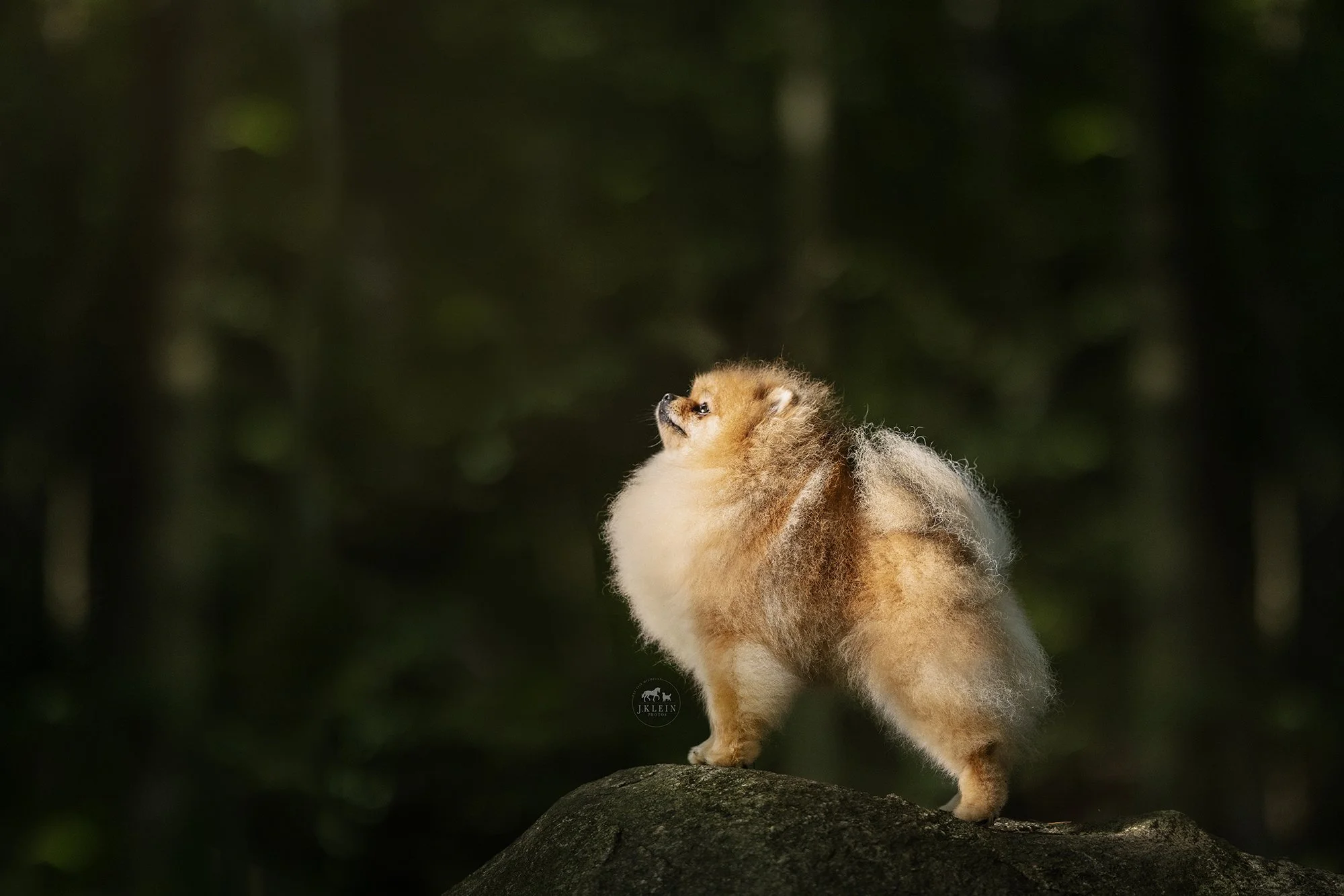
Scheduling earlier in the day, will give you more light in darker forests, but in lighter forests you'll end up with spotty lighting.
Scheduling for a location with flat elevation means you'll have light longer, but if there is a difference in elevation, you may lose the light 2+ hours earlier than expected.
Scheduling a darker dog, means shooting an hour sooner so you can capture details without trashing your photos with grainy ISO, where a lighter dog, you may want to do later in the day, so they POP from a darker background.
Portraits don't require as much light, because the dog isn't moving, or at least not moving FAST, but with actions shots - you need MORE light for a higher shutter to stop the action.
Also... do your trails run in the direction you want for lighting? Is this a trail you need to schedule for a morning or evening shoot to achieve that lighting for those specific spots in the trail you want to use?

TRAIL DIFFICULTIES & TEXTURES…
Wild forests are going to have a lot of clutter from fallen trees, branches, and may have smaller vegetation that smaller dogs drown in.
Maintained trails in state parks may offer more options for cleaner backgrounds, but have more foot traffic, and the possibility of hikers with off leash dogs that don't have manners or a recall.
Woodland trails often require more hiking to get to the good spots, which means more time for water breaks and rests, so the dog can close it's mouth comfortably for photos.
But - an older dog, or one with physical limitations, may not do well at a woodland location, especially if it has elevation changes.
Clients too - Do they have a physical limitation we need to be respectful of? A narrow trail with multiple high energy dogs, and a client with physical limitations, is an accident waiting to happen...
COLOR IS A DECIDING FACTOR…
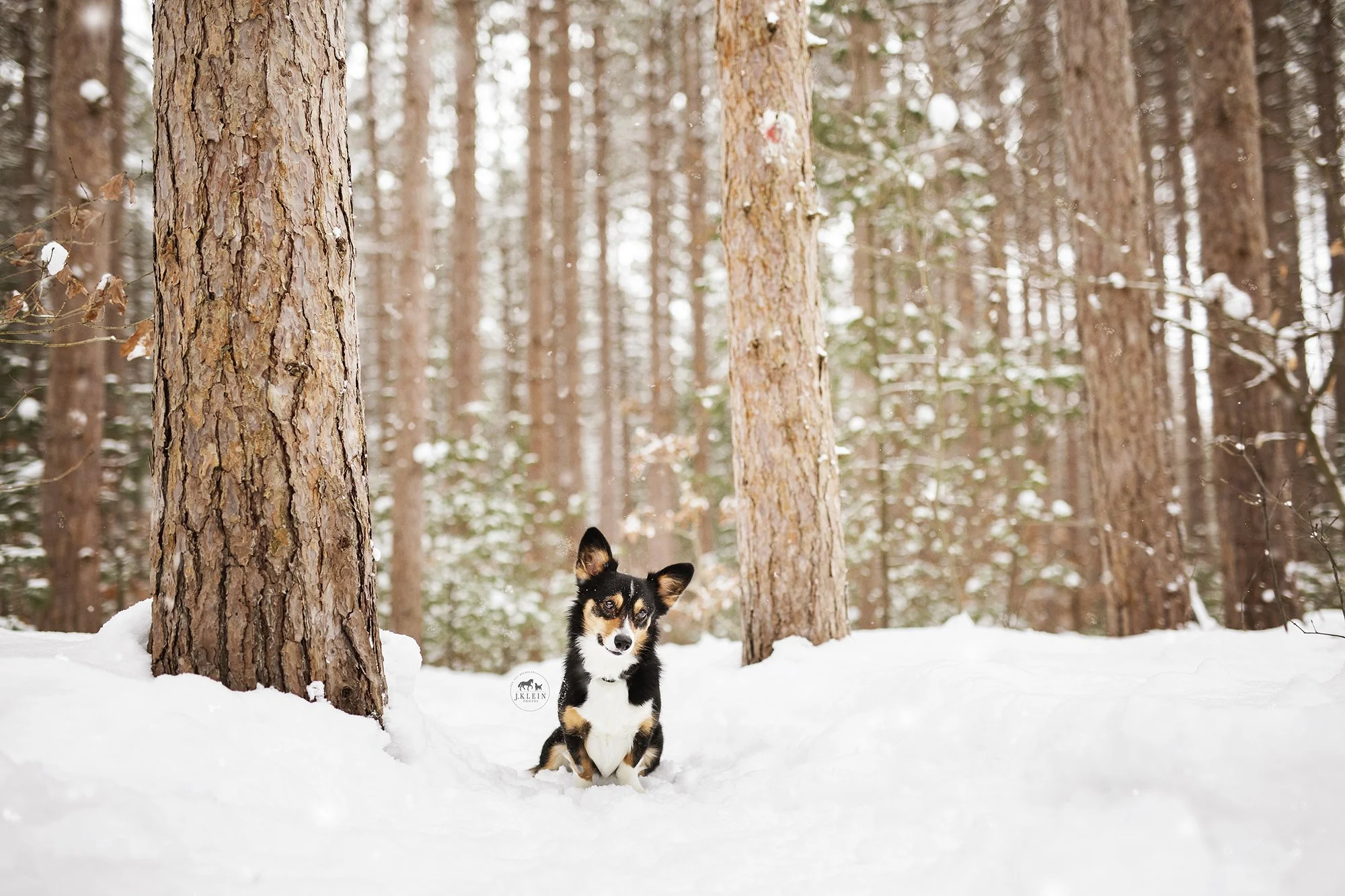
Does your client want a vibrant POP of greens, which you would get in a hardwood forest, or do they want the subtle grays and browns, which would be found in a softwood forest? How is that going to effect the coloring of the dog's coat, and the lighting - which is VERY different in a softwood vs hardwood forests.
WEATHER COMPLICATIONS…
A woodland location after a rain is going to be wet, making EVERY piece of dirt, pine needle, leaves, etc., stick to the dog's coat, which means hauling grooming tools and towels with you.
A short haired, single coat dog would give you more grace on a wet trail, but anything with a longer or double coat is going to be a disaster. This means more editing, and potentially a much shorter shoot, because when the dog is wet ... well, you can't dry a dog in photoshop....

There's a lot bouncing around in my head that I have to consider... but instead of shying away from the challenge, I am doing my best to lean into it, try new things, learn from mistakes, and hone the skills until I am confident and comfortable with woodland photoshoots.
So bare with me, and if I talk to myself or seem a bit lost on the trail during our shoot, just know it's because I'm calculating a LOT in my head, but it will be beneficial for you and your resulting photos! Promise.

